Publisher: Next Step Network & Clayton
Authors: Stacey Epperson (Next Step), Audrey Eason (Clayton)
Publication Date: January 2020
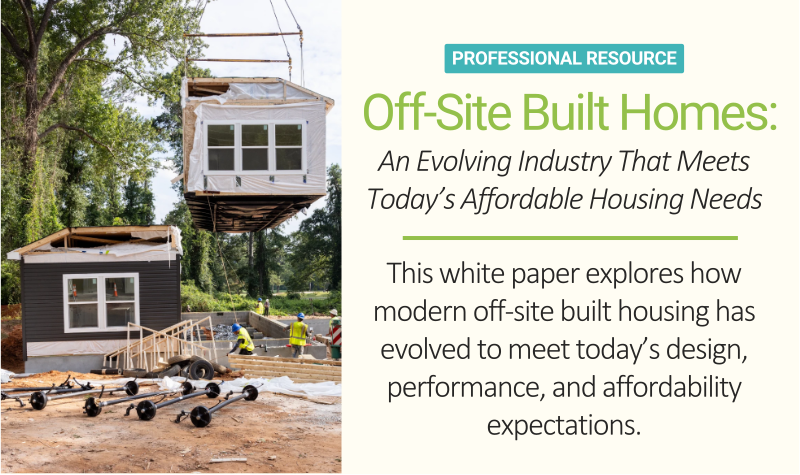
As housing affordability challenges intensify across the U.S., factory-built homes are emerging as a scalable, cost-effective solution for expanding access to homeownership. This white paper explores how modern off-site built housing – constructed under rigorous federal standards – has evolved to meet today’s design, performance, and affordability expectations.
Drawing on national data, industry research, and real-world examples, the paper addresses common misconceptions about factory-built housing. It examines demographic and market trends shaping housing demand, and highlights innovative construction, financing, and zoning approaches that help communities deliver attainable homes faster and more efficiently.
Readers will gain a clearer understanding of why off-site built homes are increasingly viewed as a sustainable solution for first-time homebuyers, aging households, disaster recovery, and infill development – without sacrificing quality, durability, or long-term value.
What You’ll Learn
- How off-site built homes have evolved since the adoption of the HUD Code and why “mobile homes” are no longer built
- Why off-site construction can reduce costs, speed timelines, and improve quality through controlled, factory-based processes
- How demographic shifts—especially among Baby Boomers and Millennials—are reshaping housing demand
- The role of off-site built housing in addressing the national shortage of affordable “starter homes”
- How new financing options, including CrossMod® homes, allow certain HUD-code homes to be appraised and financed like site-built housing
- Evidence on performance, resilience, and appreciation of off-site built homes
- Why off-site built housing is increasingly used for urban infill, planned communities, and disaster recovery